
Manual entry
Available without a provider. Enter aggregate room, meal, dietary and texture counts with an actor and timestamp.
Integrations
Queux supports manual entry and CSV import. Live provider connections depend on documented access, suitable permissions, credentials and any required commercial agreement.
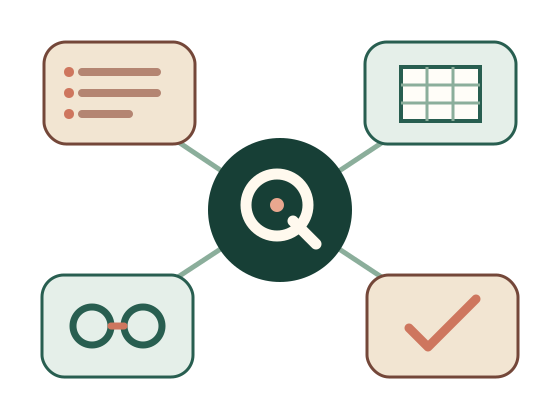
Three practical pathways
Choose the most reliable authorised source available to your service. The kitchen sees where each snapshot came from.
Connection process
A provider name alone is not an integration. Queux treats the external boundary as a reviewed implementation.
01
Verify that the provider supports the required data and that the organisation is authorised to use it.
02
Match external sites, rooms and service fields to Queux without assuming names are stable.
03
Run a connection test and review a preview before accepting operational data.
04
Record sync attempts, results and external event identifiers; surface failures for manual follow-up.
Minimum useful data
Connector design should request and store only the operational information the service has authorised for the kitchen workflow.
If a provider is unavailable, delayed or not contracted, authorised staff can continue with manual counts or CSV. The source is labelled clearly so the kitchen does not mistake it for a current live sync.
Planning a connection?